
Which Packaging Type Is Right for Your Product? A Practical Guide
Choosing packaging for your product sounds straightforward until you actually sit down to do it. Suddenly there are materials, formats, structures, and finishes to consider, and the wrong choice can affect everything from shelf life to shipping costs to how your brand shows up at retail. The reality is that packaging is one of the most important decisions a brand makes, and it deserves more thought than most people give it.
This guide breaks down the four primary packaging types Beyond Print offers, what makes each one distinct, and which kinds of products they’re best suited for. Whether you’re launching something new or rethinking an existing package, this is a good place to start.
Flexible Packaging: The Workhorse of Modern Product Packaging
Flexible packaging is exactly what it sounds like. It uses lightweight, pliable materials that conform to the shape of the product rather than holding a fixed structure. It’s one of the most widely used packaging formats across industries today, and for good reason.
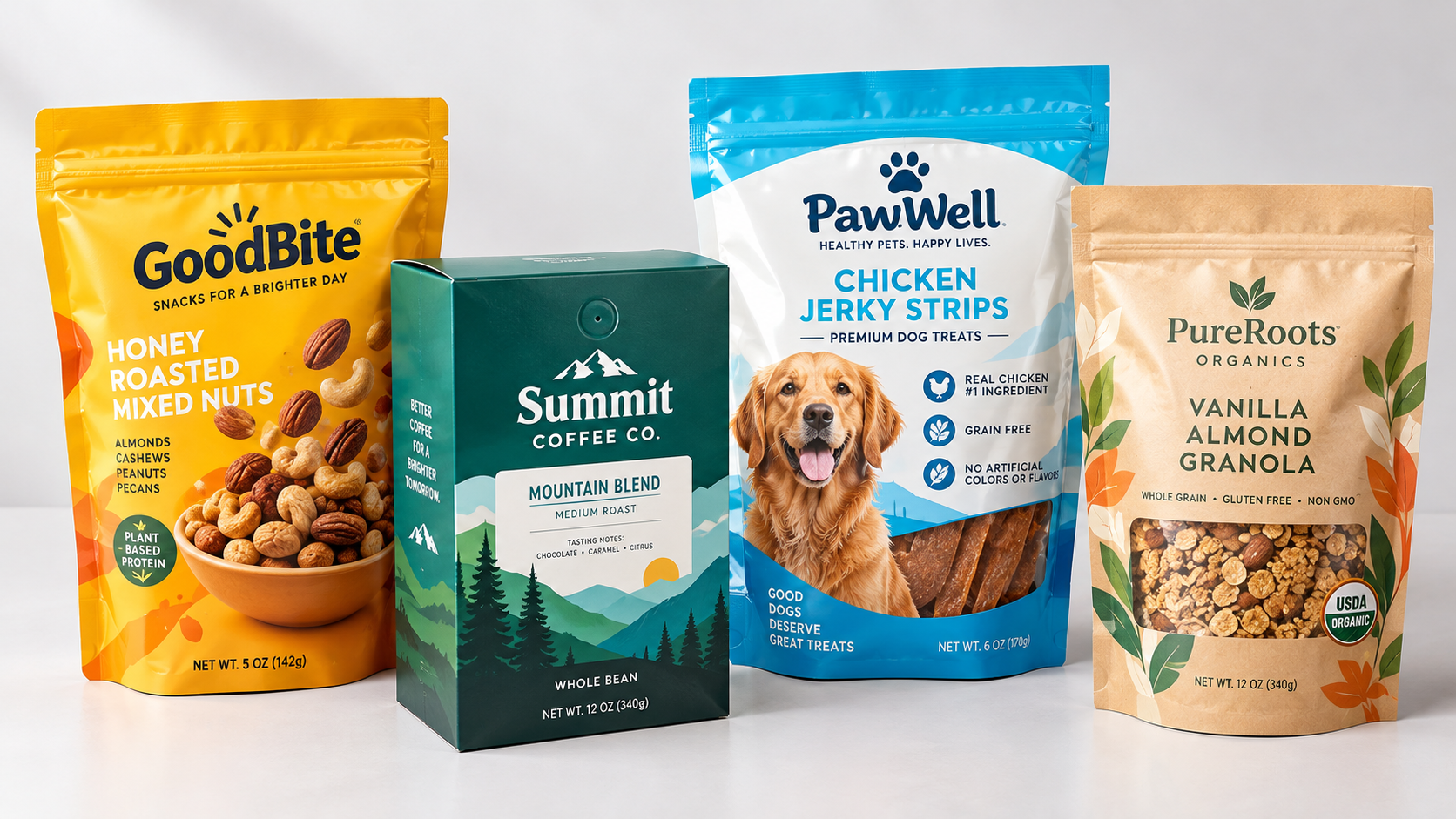
The advantages are significant. Flexible packaging is lighter than rigid alternatives, which reduces shipping costs and material usage. It’s highly customizable in terms of format, ranging from stand-up pouches and flat bottom pouches to spouted pouches and pillow pouches, and it offers excellent print surface area for branding and product information. It’s also versatile enough to work across a wide range of filling methods and sealing requirements.
Flexible packaging is typically the right fit for:
-
Food and snack products including chips, jerky, dried fruit, nuts, and granola
-
Coffee and tea, where barrier properties help preserve freshness and aroma
-
Pet food and treats, where durability and resealability are important to the end consumer
-
Agricultural and lawn products, where flexible pouches handle volume well
-
Retail and e-commerce products, where lightweight packaging reduces fulfillment costs
If your product is sold by weight or volume, needs a moisture or oxygen barrier, or benefits from a resealable format, flexible packaging is almost always worth a serious look.
Rigid Packaging: Maximum Protection and Premium Presentation
Rigid packaging holds its shape regardless of what’s inside it. Think folding cartons, corrugated packaging, and rigid plastic solutions. Where flexible packaging prioritizes efficiency and versatility, rigid packaging prioritizes structural integrity and visual impact.
The tradeoff is worth it for the right application. Products that are fragile, irregularly shaped, or need to communicate a premium quality signal at retail often perform better in rigid packaging. Rigid formats also stack and ship more predictably, which matters for supply chain operations managing large volumes.
Rigid packaging is typically the right fit for:
-
Products requiring added protection during shipping or handling
-
Retail categories where shelf presence and premium presentation drive purchase decisions
-
Items that are fragile or need to maintain a specific shape in transit
-
Brands where the unboxing experience is part of the product value
-
Businesses with products that need to stand upright or stack consistently on retail shelves
If your product is delicate, if your brand competes at the premium end of its category, or if you’re operating in a retail environment where the package itself needs to do heavy lifting, rigid packaging is worth the investment.
BOPP Packaging: High Performance with High Visual Impact
BOPP stands for Biaxially Oriented Polypropylene, and it has become one of the most popular flexible packaging materials on the market for good reason. It combines the lightweight, versatile characteristics of flexible packaging with standout performance properties that make it particularly well suited for products that need to look great and hold up in demanding conditions.
BOPP offers excellent moisture resistance, which matters for products stored in humid environments or subject to condensation. It delivers exceptional print quality, meaning graphics are sharper, colors are more vibrant, and your brand shows up on the shelf the way it was designed to. It’s also durable, with strong resistance to tearing and puncturing that gives it a longer functional life than many alternative materials.
BOPP packaging is typically the right fit for:
-
Food products where moisture resistance and barrier performance are important
-
Coffee and specialty food brands where visual impact on shelf drives sales
-
Pet treats and snacks where durability and resealability matter
-
Agricultural products that are stored or transported in variable conditions
-
Retail brands competing in crowded categories where packaging differentiation is a real competitive advantage
If you’ve been using flexible packaging and feel like your current material isn’t delivering on print quality or shelf durability, BOPP is often the upgrade worth exploring. Many brands that switch to BOPP do so specifically because of what it does for their visual presence at retail.
Sustainable Packaging: Performance Without Compromising Your Goals
Sustainable packaging has moved well beyond being a marketing trend. Businesses across industries are facing real pressure from retail partners, consumers, and internal sustainability goals to reduce their environmental footprint, and packaging is one of the most visible places to make progress.
The challenge has always been that sustainability and performance haven’t always gone hand in hand. Materials that reduced environmental impact sometimes came with compromises in barrier properties, print quality, or structural integrity. That gap has narrowed considerably, and the right sustainable packaging partner can help you find solutions that meet both your environmental commitments and your operational requirements.
Beyond Print works with customers to evaluate sustainable packaging options designed around their specific products and long-term business goals. That means the conversation starts with what your product needs, not just what’s available.
Sustainable packaging is worth exploring if:
-
Your retail partners have set sustainability or packaging reduction requirements
-
Your brand has made public commitments to reducing packaging waste or environmental impact
-
You’re in a consumer category where sustainability is a meaningful purchase driver
-
You’re looking to reduce material usage without sacrificing product protection
-
You want to future-proof your packaging program against tightening regulations or retailer mandates
Sustainable packaging isn’t a one-size-fits-all category. The right solution depends on your product, your supply chain, and what sustainability means for your specific operation. Getting the right guidance early in the process saves a significant amount of time and money down the road.
Not Sure Where to Start? That’s What We’re Here For.
The honest answer is that most products don’t fall neatly into a single packaging category. A coffee brand might be deciding between flexible and BOPP. A food startup might be weighing sustainable options against the cost and performance of a proven flexible format. A retail brand might be evaluating rigid packaging for a premium line while running flexible on everything else.
That’s exactly the kind of conversation Beyond Print is built for. As a direct packaging manufacturer with over 50 years of experience, Beyond Print works closely with brands of all sizes to evaluate their options and develop packaging solutions that support product protection, retail presentation, and supply chain efficiency.
The process doesn’t have to be complicated. It starts with understanding your product, your goals, and what you need your packaging to do. From there, the right format tends to become clear pretty quickly.
If you’re ready to find the packaging solution that fits your product, reach out to the Beyond Print team today. We’ll help you get it right.