
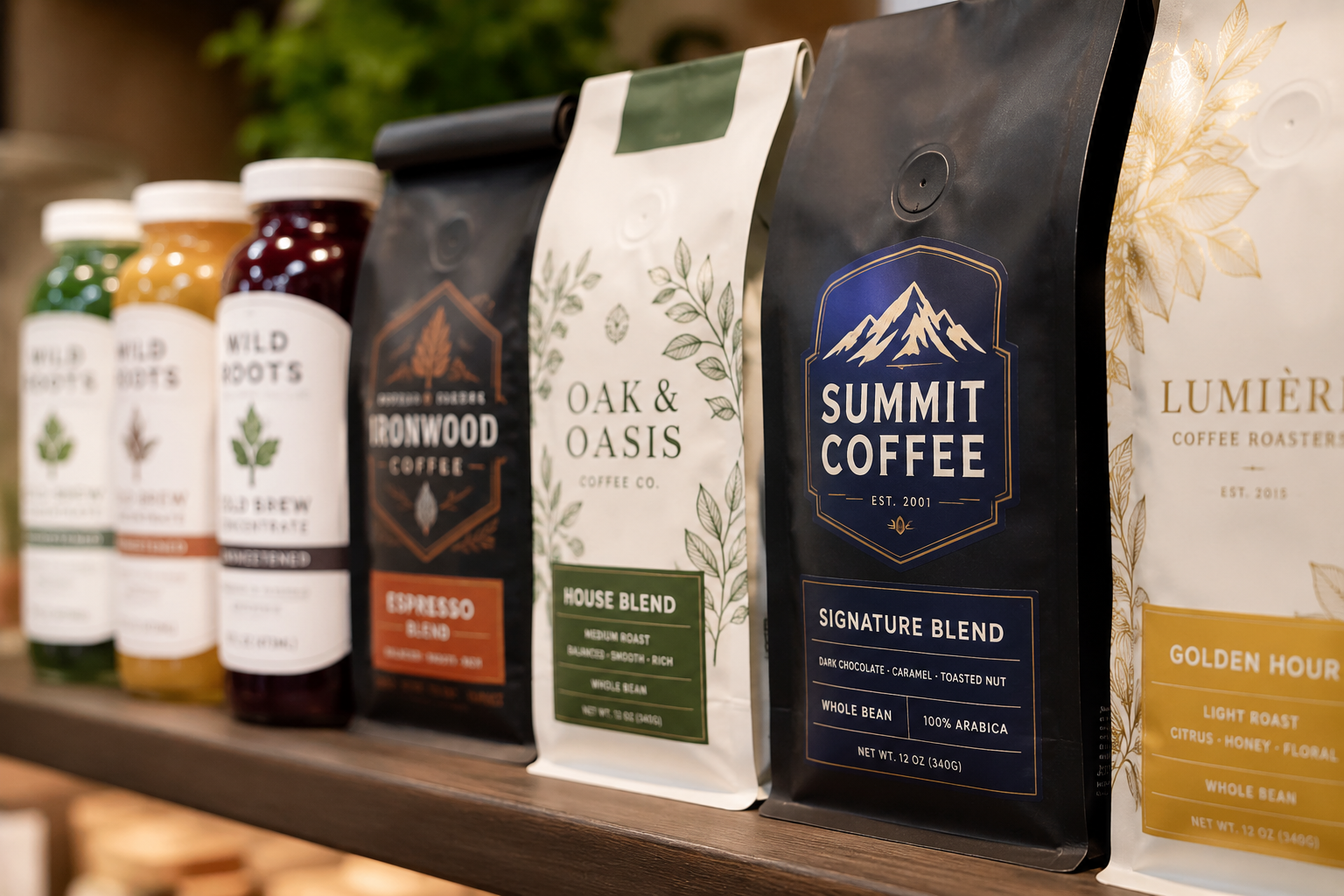
The Bag Is Part of the Product
Specialty coffee has redefined what consumers expect from a cup of coffee. Single-origin sourcing, small-batch roasting, and intentional flavor profiles have created a category where quality is everything. But for many roasters, the bag is an afterthought.
It should not be.
The packaging your coffee ships in affects freshness, shelf life, brand perception, and the first impression a customer gets before they ever open the bag. For specialty roasters competing in a crowded market, the right coffee packaging is not a cost. It is a competitive advantage.
What Coffee Packaging Has to Do
Before choosing a bag style or finish, it helps to understand what coffee packaging is actually being asked to do. A great coffee bag has to:
Protect Freshness and Aroma.
-
Freshly roasted coffee releases carbon dioxide for days after roasting. Without a degassing valve, that gas has nowhere to go and can compromise both the bag and the product inside. A one-way degassing valve allows CO2 to escape without letting oxygen in, protecting the roast from the moment it is packaged.
Block Oxygen and Moisture.
-
Oxygen is the enemy of fresh coffee. Barrier films engineered specifically for coffee packaging limit oxygen transmission and moisture exposure, extending shelf life without sacrificing quality.
Reseal Reliably.
-
A consumer who opens a bag and cannot reseal it properly is a consumer who blames the product. A quality resealable package keeps the coffee fresh after opening and keeps the customer coming back.
Stand-Up on Shelf.
-
Shelf presence matters in retail. A bag that slumps or tips is a bag that gets passed over. Structural integrity from the point of production through retail display is a packaging requirement, not a bonus.
Tell the Brand Story.
-
The surface of a coffee bag is premium real estate. Color accuracy, finish quality, and print clarity all communicate something about the roaster before the customer reads a word.
Bag Formats for Coffee
Not every coffee product needs the same bag. The right format depends on your product, your channel, and your brand positioning.
Stand Up Pouches
The most common format in specialty coffee. Stand-up pouches offer a stable base, a strong print surface, and easy integration of resealable zippers and degassing valves. They work across retail, e-commerce, and wholesale channels and scale well from small batch to high volume production.
Flat Bottom Pouches
An increasingly popular choice for premium coffee brands. Flat bottom pouches offer more shelf stability than a standard stand-up pouch and a larger print surface for brand storytelling. The structured base communicates a premium positioning that resonates with specialty consumers.
Side Gusset Bags
A traditional coffee bag format that remains popular for whole bean products. Side gusset bags accommodate larger volumes and are well suited for wholesale and foodservice channels where presentation is secondary to function.
Materials and Finishes That Matter
The material and finish combination on your coffee bag affects both performance and perception.
Barrier Films
A multi-layer barrier film is standard for quality coffee packaging. The film combination determines oxygen transmission rate, moisture resistance, and overall shelf life protection. For specialty coffee with longer retail timelines, a high barrier film is not optional.
Matte Finish
Matte laminate has become the signature finish of the specialty coffee category. It communicates craft, intentionality, and premium quality at a glance. It also photographs beautifully, which matters in an era where packaging lives on social media as much as it does on a shelf.
Gloss Finish
Gloss finishes offer vibrant color pop and a more traditional retail look. For brands targeting mainstream grocery channels or competing in a price-sensitive segment, gloss can be the right call.
Kraft and Specialty Finishes
Natural kraft finishes signal sustainability and small-batch craft. Specialty finishes including metallics, soft touch laminate, and spot gloss can elevate a premium line and create strong shelf differentiation.
The Details That Separate Good Packaging from Great Packaging
Color Accuracy
Your brand colors need to look the same on every bag, every run, every time. Color drift between production runs is one of the most common and most damaging packaging problems specialty roasters face. Working with a manufacturer who takes color matching seriously is not a preference. It is a requirement.
Seal Quality
Not all resealable packages are created equal. A package that feels cheap, skips, or fails to create a proper seal reflects directly on the brand. Test it before you commit to a production run.
Print Registration
Precise print registration ensures that every graphic element lands exactly where it should on every bag. Off-registration printing is immediately noticeable and communicates a lack of quality control that specialty consumers will notice.
Why the Right Packaging Partner Matters
Specialty coffee is a category built on craft and quality. Your packaging partner should reflect those same values.
The right manufacturer asks you the right questions before production starts. What is your roast-to-ship timeline? What channels are you selling into? What are your shelf life requirements? What finish communicates your brand positioning? What volume are you running, and where do you expect to be in twelve months?
Those questions determine the spec. The spec determines the performance. And the performance determines whether your packaging protects the investment you have made in every bag of coffee you roast.
Beyond Print has supplied flexible packaging for food and beverage brands across the country for decades. Our in-house design capabilities, color matching standards, and material expertise make us a trusted partner for specialty coffee brands at every stage of growth.
Whether you are launching your first retail bag or scaling a regional brand into national distribution, we are ready to help you get the packaging right.